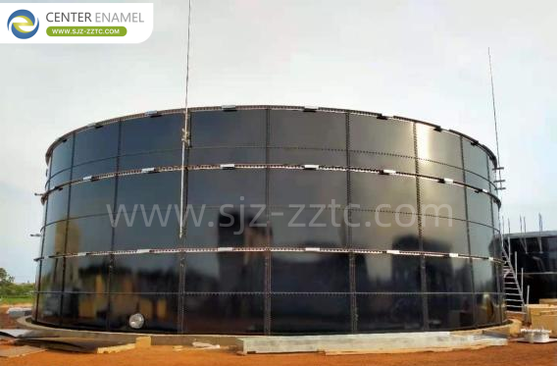
Biogas Technology for Pig Farm Wastewater in South Africa: Using GFS Tanks and CSTR Process

제품 상세정보
원래 장소: 중국
브랜드 이름: CEC TANKS
인증: ISO 9001:2008, AWWA D103 , OSHA , BSCI
모델 번호:
지불과 운송 용어
최소 주문 수량: 1세트
가격: $5000~$20000 one set
포장 세부 사항: 각 두 개의 강판 사이에 PE 폴리폼; 나무 팔레트와 나무
배달 시간: 보증금 수령 후 10-30일
지불 조건: 신용장, 티/티
공급 능력: 달 당 60 세트

상세 정보

원래 장소 중국 브랜드 이름 CEC TANKS
인증 ISO 9001:2008, AWWA D103 , OSHA , BSCI 모델 번호
탱크 본체 색상: 진한 녹색 / 사용자 정의 가능 부식 무결성: 훌륭한
강판 두께: 3mm ~ 12mm, 탱크 구조에 따라 다름 내화학성: 훌륭한
패널의 크기: 2.4M * 1.2M 청소가 용이함: 매끄러움, 광택, 불활성, 접착 방지
강조하다:

biogas technology for pig farms

,

GFS tanks wastewater treatment

,

CSTR process biogas production

제품 설명

Biogas Technology for Pig Farm Wastewater in South Africa: Using GFS Tanks and CSTR Process

This article examines advanced biological treatment frameworks designed to transform agricultural waste into clean, renewable energy. It details the operational mechanisms of enclosed anaerobic digestion systems. Furthermore, the guide highlights critical containment technologies and structural configurations utilized across modern agricultural installations. Finally, it outlines turnkey execution strategies that ensure long-term environmental and financial sustainability.

Overview of Pig Farm Wastewater Sources and Treatment Challenges in South Africa

South Africa has an established agricultural and livestock sector that generates substantial volumes of organic wastewater daily from intensive farming operations. Pig farm wastewater is primarily composed of animal manure, urine, washdown water, and feed residues, resulting in extremely high concentrations of chemical oxygen demand, biological oxygen demand, and suspended solids. Managing this heavy organic load poses severe environmental challenges for local agricultural operators. Discharging untreated or inadequately treated slurry directly into local water channels causes severe eutrophication, oxygen depletion, and strong odor emissions. Traditional open lagoons require vast expanses of land, offer poor odor containment, and fail to meet increasingly stringent national environmental regulations, making modern enclosed treatment systems essential.

How Pig Farm Wastewater is Converted into Biogas

The conversion of livestock wastewater into renewable biogas relies on a multi-stage anaerobic digestion process driven by specialized microorganisms. In the absence of oxygen, complex organic compounds are broken down through hydrolysis, acidogenesis, acetogenesis, and methanogenesis. First, extracellular enzymes hydrolyze insoluble macromolecules into soluble monomers. Acid-forming bacteria then convert these monomers into volatile fatty acids. Next, acetogenic bacteria transform these acids into acetate, hydrogen, and carbon dioxide. Finally, strict anaerobic methanogenic archaea convert these intermediates into methane gas and carbon dioxide. This biological stabilization process successfully destroys pathogens, reduces environmental pollution loads, and captures valuable methane gas for on-site energy utilization.

Center Enamel Provides Professional Design Solutions for Biogas Projects

Designing a reliable and efficient agricultural waste-to-energy facility requires high-level technical expertise, precise engineering calculations, and strict adherence to global manufacturing standards. Center Enamel delivers tailored, high-performance biogas project solutions optimized for local climatic conditions and specific farm scales. Our multidisciplinary engineering team handles everything from initial mass balance computations and process layout to structural design and automated control integration. By combining advanced corrosion-resistant containment technologies with robust process packages, we ensure maximum methane yield and long-term structural durability in compliance with major international standards such as AWWA D103, ISO 9001, NSF/ANSI 61, and ISO 28765.

Core CSTR Technology for High-Efficiency Fermentation

At the center of the anaerobic treatment system is the Continuous Stirred-Tank Reactor, which functions as the primary biological reaction vessel for organic waste stabilization. CSTR technology ensures that fermentation substrates and active anaerobic microorganisms are thoroughly and continuously mixed within a sealed environment. Equipped with an advanced mechanical stirring assembly featuring internal paddles, robust agitator shafts, and shell-breaking devices, the reactor maintains a uniform temperature and a continuous or semi-continuous feeding regime. This prevents thermal stratification and floating crust formation, allowing high-concentration wastewater with heavy suspended solids to undergo complete digestion, supported by integrated safety elements such as positive and negative pressure protectors.

Advanced Containment with GFS Tanks and Double Membrane Roofs

To withstand the highly corrosive conditions typical of livestock slurry digestion, primary reaction vessels require superior metallurgical and coating technologies. Center Enamel manufactures industry-leading Glass-Fused-to-Steel (GFS) tanks by fusing specially formulated inorganic glass frit onto high-strength steel plates at extreme temperatures between 820°C and 930°C. This dual-coating structure combines the structural strength of steel with the exceptional chemical resistance of glass, eliminating corrosion risks. To capture the generated gas efficiently, Integrated Double Membrane Roofs provide an optimal solution. Featuring an inner gas storage membrane and an outer weather protection membrane regulated by automated air pressure controls, this setup maximizes spatial efficiency and ensures complete gas-tightness.

Comprehensive Storage Tank and Roof Options for Modern Biogas Facilities

Different phases of an anaerobic digestion plant require specialized containment structures and cover configurations tailored to specific operational requirements. Center Enamel manufactures a diverse array of alternative storage tanks, including Galvanized Steel Tanks treated with durable zinc protective layers, Fusion Bonded Epoxy (FBE) Tanks developed in cooperation with AkzoNobel for seamless chemical barriers, and Stainless Steel Tanks (AISI 304/316) built for extreme chemical resistance.

To complement these vessels, our comprehensive roof options include Aluminum Geodesic Dome Roofs for clear-span durability, Glass-Fused-to-Steel Roofs for pressurized odor control, Aluminum Alloy Trough Deck Roofs for non-airtight rainwater protection, Stainless Steel Roofs for harsh industrial environments, and FRP Roofs available in dome or flat designs for agricultural water storage.

Essential Supporting Equipment for Integrated Biogas Ecosystems

A fully functional agricultural biogas installation requires a synchronized suite of auxiliary equipment to prepare feedstock, purify gas, and manage digestate. Mechanical Bar Screens initially remove large coarse debris from raw influent. Homogenization Tanks balance flow variations before entering the CSTR system. Solid-Liquid Separators mechanically divide fermented digestate into fibrous organic fertilizer and liquid digestate for agricultural application or Black Film Pond storage. Gas Holders provide secondary gas storage capacity. Dehydration and Desulfurization Tanks eliminate moisture and corrosive hydrogen sulfide from the biogas stream. Booster Fans maintain stable gas pressure, while Flowmeters track volumetric output. Finally, Torch Systems, Boilers, and high-efficiency Biogas Generators or CNG systems convert the purified gas into useful thermal and electrical energy.

One-Stop Solution Provider for Turnkey Biogas Project Execution

Center Enamel operates as an all-inclusive, one-stop solution provider, streamlining the entire lifecycle of industrial and agricultural biogas installations. Operating from a massive 150,000-square-meter manufacturing base with an annual production capacity exceeding 250,000 sheets, we support clients across more than 100 countries worldwide. Our core business scope encompasses full EPC contracting, specialized Process Package engineering, and direct Equipment Supply. By overseeing every project phase from concept design and precision fabrication to site erection, testing, and operator training, we minimize project risk, control capital expenditure, and guarantee reliable plant performance that meets international environmental standards.

Conclusion

Transforming livestock effluent into clean renewable energy offers a sustainable pathway for modern agriculture. By integrating robust GFS containment vessels, advanced CSTR fermentation technology, and comprehensive gas utilization equipment, farms can eliminate pollution hazards while achieving long-term energy independence.

Frequently Asked Questions

How do auxiliary torch systems ensure safety compliance during unexpected biogas overproduction events?

Torch systems safely flare off excess methane gas when storage capacity is fully maximized or during emergency shutdowns, preventing hazardous pressure buildups within the containment network.

What role do booster fans play in maintaining stable gas delivery to downstream energy generation units?

Booster fans actively regulate and maintain optimal pressure levels within the gas transmission pipeline, ensuring a steady, reliable supply of purified fuel to generators and boilers.

Why are fiberglass reinforced plastic (FRP) covers utilized for specific open-top water storage units?

FRP covers provide lightweight, highly corrosion-resistant protection for auxiliary water reserves, preventing biological growth and debris contamination while requiring minimal structural upkeep.

이 제품에 대한 더 많은 세부사항을 알고 싶습니다
당신의 조회 내역에 들어가세요.
Shijiazhuang Zhengzhong Technology Co., Ltd
sales@cectank.com
86-20-34061629
푸리 상가센터 301번 방, 신가랑 서쪽 11번 도로, 하이주 지역, 광저우, 광둥 성, 중국
메시지를 남기세요
*이메일
*메세지
전송
중국 좋은 품질 유리 가 강철 탱크 에 녹여 공급자. 저작권 2016-2026 cectanks.com . 무단 복제 금지.
메시지 보내기